North Korea

North Korea
The always bombastic and unpredictable North Koreans go hysterical again. This time the country is prepared to "go to war" with South Korea because that country is playing loudspeakers directed at North Korean territory. A headline from a UK paper reads, "More than 50 North Korea submarines 'leave their bases' as war talks with South continue "
Showing posts with label Ukraine. Show all posts

Sunday, October 26, 2014

Election Sunday ...

October 25 ... lots of elections occurring today, a few of which may prove memorable.

Four national elections to note:

Brazil is conducting a presidential election, so one can first note that anytime there is a "decent" (ie, fair and transparent) process, that stands in great contrast to dictatorships, sham elections, and civil war.

In this case, voters are being asked to either return current President Dilma Rousseff of the left-leaning Workers Party (PT) or promote centrist Aecio Neves of the Brazilian Social Democracy Party (PSDB) to the high office. As the BBC puts it, "Both candidates have pledged to kick-start Latin America's largest economy and make it more competitive."


Brazilian President Dilma Rousseff (left) and candidate Aecio Neves (right). Brazil is the largest and most populous country in South America, and 140 million Brazilians are expected to vote. Photo from the BBC

Rousseff is credited with government spending that has lifted millions of Brazilians out of poverty, but also criticized for overspending on international sporting events - the recent World Cup and the 2016 summer Olympics.


Voters in Brazil queue for polling booth. The older Teatree gets, the more he realizes that orderly vote casting, where citizens believe in the process, is not a given in much of the world. Photo from the BBC.

Outcome: It appears Rousseff has eked out a narrow victory

Tunisia is also holding elections. This is the country that ignited what the world has come to know as "the Arab spring" (which unfortunately degenerated badly in most cases.) In this election, voters will elect representatives to a five-year term in parliament, and it is the first chance under a new constitution to weigh in since the long-time dictator Zine El Abidine Ben Ali was overthrown in 2011.


Tunisia is the northern most African country, population around 11 million, and the lone remaining positive example of what was dubbed the "Arab Spring" (where Arab nations would throw off dictatorships and oppressive rule for more responsive governance. Instead, civil wars, unrest, and clampdowns across most of these nations was the result.)


For a Westerner, this queue of western dressed Tunisians is a hopeful sign. Photo from BBC

Two leading parties likely to do well are 1) Ennahada, the moderate Islamist party that has governed Tunisia since 2011 and oversaw the writing of the new constitution. Critics call it the local version of the Muslim Brotherhood, while the party itself considers it to be pragmatic, tolerant, a promoter of women's rights, and is not even putting up a presidential candidate. 2)the party Nidaa Tounes, is being led by an 87 year old Beji Caid Essebi. This is a secular party, but Essebi was a longtime government leader in the decades past.

Hopes are high across the country that Tunisia can forge a positive approach to governance in the years ahead, avoiding the disasters of so many other Arab political movements in the past 5 years. Al Jazeera, the news organization, has a nice article on the many parties and new constitution here.

Outcome: None yet, though there was heavy voter turnout which in itself is considered as positive.

Ukraine is holding snap elections for its parliament that are likely to cement current President Poroshenko's call to orient the country towards the European Union. The outcome, if anticipated to be pro-Western, may further inflame tensions with Russia and pro-Russian separatists.

Ukrainians are taking this round of voting seriously, sensing a real crossroads ahead. Photo from johnib.wordpress.com

Outcome: Pro Western candidates have been given strong support.

Uruguay is also holding elections this Sunday, with al Jazeera describing the two candidates as left-wing Frente Amplio party leader and former president Tabare Vazquez challenged by Luis Lacalle Pou from the conservative Partido Nacional party. Perhaps the most interesting aspect of this election is that the most popular person in the room is the President in charge now, Jose Mujica, who is barred from another term. Mr Mujica over the past four years has donated most of his salary to aid the poor, lives on a farm in the outskirts of Montevideo where he and his wife "cultivate chrysanthemums for sale." He declined to live in the presidential palace and has kept an old Volkswagen Beetle for transportation.


Uruguay is a small country in South America with just 3.5 million. Map from kr.made-in-china.com
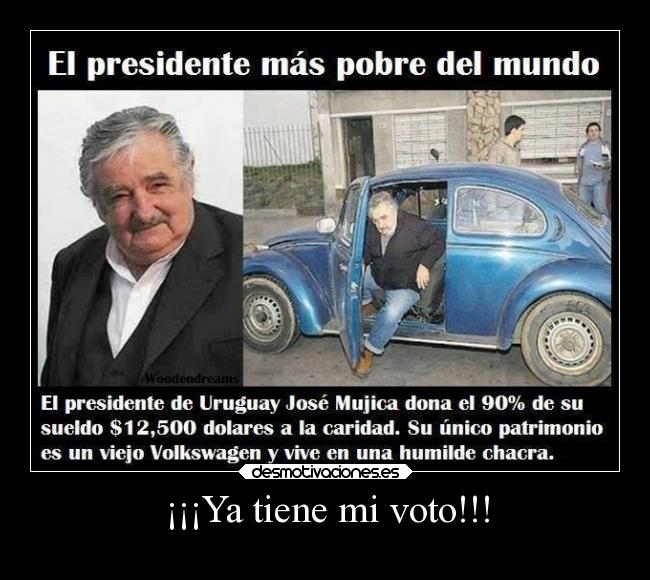

Immediate past president Mujica and his now famous blue Beetle." Poster from desmotivaciones.es

Outcome: Inconclusive - a second and final round is scheduled for November 30, though candidate Vazquez received the most votes today.

Compliments to all the governments and citizens who today showed they can address governance peacefully.

Sunday, October 5, 2014

Latvian anxieties influence its latest election

It is fall in Northern Europe - and real fall in one of the Northernmost European countries not on the Scandinavian peninsula.

The three Baltic states of Estonia, Latvia, and Lithuania. Summer is short, and now it is over. Graphic from www.lesechos.fr

In Latvia, the middle of the Baltic three, an election just took place that resulted in a return of a center-right coalition to governance, consisting of three parties, the Unity party, the Nationalist Alliance and the Union of Greens and Farmers.

What's the significance?

From a Reuters news article, "Years of austerity after the global financial crisis have dented the coalition government's popularity. But the conflict in Ukraine has shifted focus from the economy to security in a country where ethnic Russians make up almost 21 percent of voters and have heavily backed the pro-Russian opposition Concord party.

Augusts Brigmanis, leader of the Union of Greens and Farmers summed it up this way, "That is what the voter expects from us: stability for the country, a steady political course and Western values, and we will guarantee that..."


Mr Brigmanis, the 62-yr old leader of the Union of Greens and Farmers party. Photo from www.delfi.lv

Prime Minister Laimdota Straujuma stated, "This election is different because of what is going on in Ukraine ... The situation is escalating there again and people are worried what will happen because we have a border with Russia." Straujuma has increased defense spending and joined Baltic neighbors Estonia and Lithuania in pressing for a bigger NATO presence in their nations.


Laimdota Strujuma, leader of the Unity party and currently the Latvian Prime Minister, has emphasized suspicions regarding Russian restlessness across a number of former USSR satellite nations.

The coalition upped its number of seats in Parliament to 61 from 47, while Harmony (or alternatively called Concord), a center-left party garnered 24 seats. While this opposition party espouses "equality, justice and solidarity," it is perceived as a pro-Russian party in a nation where ethnic Russians comprise over 21 percent of Latvia's population.

It might not have gone this way without the Russian meddling in Ukraine and the bold takeover of the Crimean Peninsula. Now, the large majority of Latvians are in no mood to ignore Russian assertiveness.

A couple interesting points.

What is a Green Party doing in a centre-right coalition? For that matter, what is the connection between Greens and farmers?

Apparently, the Green party in Latvia is much more centrist than leftist as in much of Western Europe. And from Wikipedia, "Latvians are supportive of traditional small farms and perceive them as more environmentally friendly than large-scale farming: Nature is threatened by development, while small farms are threatened by large industrial-scale farms. This perception has resulted in an alliance between green and farmer's parties, which is very rare in other countries."


Latvia has steadfastly supported its small farm heritage. Photo from pulitzercenter.org

(This sounds vaguely similar to Modi's concerns clear around the globe in India, where he steadfastly supports space for India's myriad small farmers facing industrial, transnational food industries in so much of the West.

Winter in Latvia is tense, from a geopolitical legacy.

From a Policy Review source, we read, "Latvia is one of the most energy import dependent countries in the EU. With the exception of peat and timber, Latvia had no significant domestic energy resources and received 93% of its imported energy from Soviet republics in 2007."


Mechanized peat harvesting in Latvia. Photo from www.legro.nl

It also has a large legacy of Soviet era apartment blocs with inefficient heating and power designs. So Latvia is very much aware of its over-dependence on Russian gas supplies and is working steadily to increase diversity in its sources.


Old Soviet era apartment blocks in Liepāja, Latvia. Photo from en.wikipedia.org

Well, let's keep Latvians in mind as winter approaches. They are nervous about Russian energy reliability, as much as they are about the Russian state agitating among the 20 percent of the population that is Russian. And by happenstance, Latvia is poised to take over the European Union's rotating six-month presidency in January.

A couple more pictures of this country of just two million.


Riga, Latvia's capital. Photo by Aleksandrs Kendenkovs, courtesy of the Latvian Institute, www.latvia.lv


Winter in Latvia - heating and energy are important. Photo from www.aidi.lv

PS. Another rarity, Latvia's Defense Minister,Raimonds Vējonis, is from the Union of Greens and Farmers party ..

Sunday, June 29, 2014

Refugees and other flows from regional conflicts grow

"The first casualty, when war comes, is truth" is a statement that has been often repeated and modified. It is attributed to Hiram Johnson (1866-1945), a "staunchly isolationist" Republican senator from California in reference to World War 1. (Hmmm, the 100th anniversary of what is considered the precipitant act of that war was held this week. As the Australian Broadcasting Service (ABC) concisely summarizes, "the Archduke Ferdinand - the heir to the Austro-Hungarian throne - was shot dead with his wife Sophie on a June morning in 1914. Ferdinand's murder by Gavriol Princip, a 19-year-old Bosnian Serb, set the Great Powers marching to war. More than 10 million soldiers died, as empires crumbled and the world order was rewritten.")

Click on image for full picture
Yes, the 100th year commemoration of the assassination, carried out by the Bosnian, Gariol Princip, was held in Sarajevo, Bosnia and Herzegovina, but not without controversy!. Apparently the killing is seen very differently by Bosnians, Croats, and Serbs. To some in Bosniak parts of the country, Princip was a terrorist; to some Serbs, he is largely viewed as an ethnic Serb nationalist, while others see in him a pan-Slav idealist. In this picture by the BBC, a Serbian flag is carried in the eastern B-H town of Visegrad at a separate commemoration more sympathetic of Princip.

So where was I? Teatree's POINT is that one could come up with other firsts besides truth being the first casualty. While there is little doubt that truth is quick to go - yes, yes, and yes - Teatree observes that the wrenching of civilians from their homes may even come sooner.

Three refugee flows

Inside Iraq

We've read much of Syria's streams of civilians heading to Turkey and Jordan - hundreds of thousands - and some were even a couple years ago fleeing to Iraq. But with ISIS in Syria and Iraq making the news this past two weeks, tens of thousands of Iraqis themselves are fleeing in all directions - mainly to safe parts of their now divided country.

Click on image for full picture
Iraqis from Mosul fled everywhere, but many into the autonomous Kurdish controlled region. Photo from redstate.com

Between Russia and the Ukraine

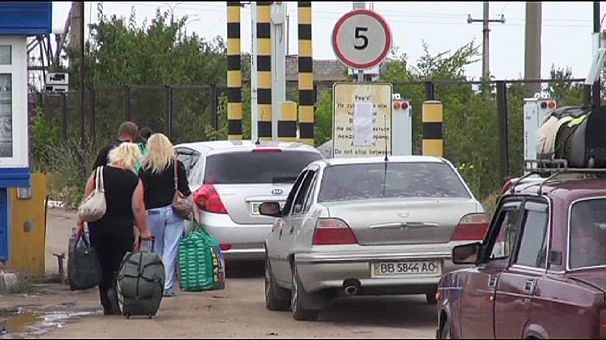
There are thousands on the roads in Eastern Ukraine. Some are heading to Russia or pro-Russian strongholds in the east of the country, while some Eastern Ukrainians are headed west to safer Ukrainian territory. The UN puts a number on internal movements - 54,000 - but notes that another 110,000 Ukrainians have gone to Russia since the first of the year.

Click on image for full picture
Pro-Russian civilians (or those simply concerned for their families' safety) going through border crossing into Russia. Photo from www.euronews.com

From Central America to the U.S.

There isn't exactly a war or conflict going on in several Central American countries - Honduras, El Salvador, Guatemala, - but it is clearly a desperate situation that stems from poverty, the rise of gangs, and violence of drug cartels in these small nations. What is unique is that children are being sent on their own to the U.S., no doubt assuming the U.S. is much less likely to return children than it would adults traveling alone.

Click on image for full picture
Central American families (not strictly just children) arriving in great numbers. An ABC article states, "The Department of Homeland Security says more than 52,000 unaccompanied minors have been detained along the U.S. border with Mexico this fiscal year. In addition, authorities have apprehended 39,000 adults with small children. The numbers reflect a significant uptick over last year, when just 24,000 unaccompanied minors were apprehended. The majority in the surge hail from Central American countries, and a disproportionate number are young women and under age 13, officials say." Photo from rt.com

Click on image for full picture
Countries under great stress, and parents sending children north Graphic from Mother Jones.com

One other flow

We've seen it before: in Libya after the overthrow of Gaddafi, unsecured weaponry flooded North African countries, and many say these weapons fueled the uptick of strength in Boko Haram and was responsible for the surge of conflict in Mali.

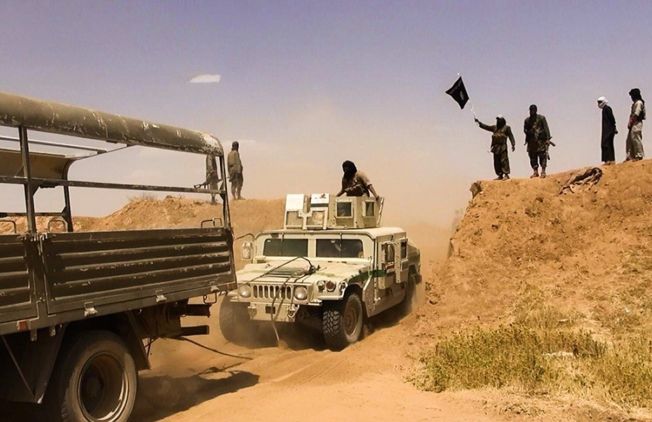
Today, a new flood of weapons is on the move. In Iraq, vast amounts of weaponry, along with vehicles and armor, changed hands. It came from Iraqi army units that melted in front of ISIS fighters, and immediately seized by ISIS itself.

Click on image for full picture
This graphic shows, if nothing else, that the border between Iraq and Syria is for now, a moot boundary. A sand berm that once delineated the line was bulldozed out by ISIS forces. ISIS or ISIL? These are Western terms, the militants refer to themselves as simply jihadis for "al-Dawla", Arabic for the State. That's the main point, they don't view the Syrian or Iraq boundaries as significant, as they are trying to establish their own Caliphate. Graphic from the BBC

Click on image for full picture
Not "just" small arms, but vehicles, tanks, missiles - and in many cases American made - have passed into ISIS hands. These incidentally are coming through early breaks in the sand berm that once delineated Syria from Iraq. Photo from www.vg.no

And so they go ...


Sunday, June 8, 2014

Putin's Russia searches for partners

On May 29, Russian President Putin stood with two national leaders from Belarus and Kazakhstan, to announce the formation of a rival to the European Union (EU), called the Eurasian Economic Union (EaEU). The three countries would provide an alternative economic trading zone to the EU, with the intent of attracting other countries, one assumes, who are unable to become members of the EU. Both Armenia and Kyrgyzstan have indicated their interest in becoming members

Click on image for full picture
The founding members of the Eurasian Economic Union - from left, President Alexander Lukashenko of Belarus, President Nursultan Nazarbayev of Kazakhstan, and President Putin of Russia. Photo from www.uznews.net

Click on image for full picture
Here in Cyrillic script, are the founding EaEU members. The gray vacancy in the southwest of the map is Ukraine, which at one point, no doubt, was assumed to become a founding partner in this alternative to the EU. Graphic from democraticbelarus.eu

Critics consider the EaEU as a Putin effort to revive the soviet empire without the communist ideology. Ukraine, however, is missing. In fact, Ukraine was trying to move towards the EU over the past years, which ultimately led to Putin's clampdown and annexation of the Crimean peninsula, as well as fueling separatist movements throughout the east of the country.

President Putin called the official establishment of the EaEU as the "central event of the year" (apparently surpassing his annexation exercise), but even among the founding three members, there was hesitation. As one article from uznews observed, "It should be noted that the signing of the document did not go as planned by Moscow. Kazakhstan, for instance, spoke out against “Russian revenge-seeking” and decided to not include such “murky” points as “common citizenship”, “foreign affairs”, “passport and visa regimes”, “common borders”, “inter-parliamentary cooperation”, and “export control”.

Belarus also signed the agreement with many corrections having rejected allegations of its economic and political weakness while its leader, Alexander Lukashenka, underscored more than once that his country is entering the union as an equal partner and will not tolerate any infringements on its sovereignty."

Click on image for full picture
The new EaEU is most likely the latest attempt to solidify the influence of Russia with its neighbors. After the collapse of the Soviet Union in 1990, there was much fanfare over the Commonwealth of Independent States (CIS) which, who knows, perhaps was trying, at least with the name, to imitate the British Commonwealth. Even then, the three Baltic states had quickly and emphatically moved away from CIS consideration. Graphic from www.canros.com

Other Putin moves:

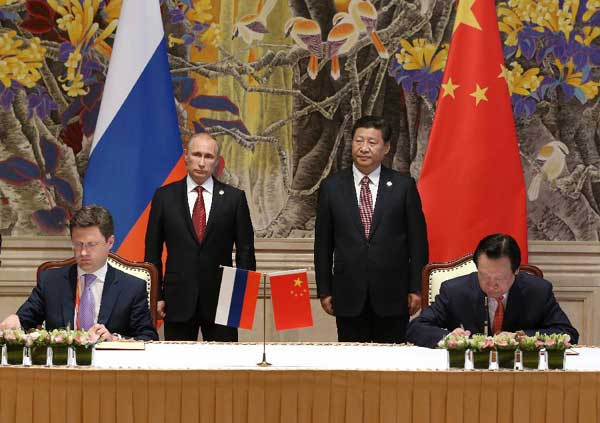
Defiant of Western sanctions for his land grab on the Crimean Peninsula, Russian President Putin also trumpeted a long term energy deal with China, selling up to $400 billion of oil and gas over 30 years. This time Putin called the deal, a “watershed event.” The agreement includes building new pipelines and terminals heading away from Europe, where most of Russia's oil and gas exports now flow. $400 billion sounds like a lot, but with Putin plowing $50 billion into the Sochi winter Olympics alone, it can be squandered ...

Click on image for full picture
Russian President Putin and Chinese President Xi Jinping at oil and gas agreement event The previous day, the two countries announced a broader energy cooperation framework agreement. Photo from cntv.cn

Click on image for full picture
Lots of new pipelines over extensive miles - all concentrated in the east of Russia and headed towards China. Graphic found in www.srbijadanas.net

Secondly, and perhaps not completely unrelated, a prospective EaEU member, Kyrgyzstan has concluded its agreement with the United States in which it provided an airbase at Manas for NATO operations in Afghanistan. While the timetable was agreed on several years ago, its coincidental timing emphasizes Russia's efforts to consolidate its previous allied borders.

The US Manas air force base in Bishkek, Kyrgyzstan ... Photo from defence.pk

From a Washington Post article, we read, "Kyrgyzstan, a mainly Muslim nation of 5.5 million, remains poor and volatile after violent revolts that have deposed two presidents since 2005. It lies on a drug-trafficking route out of Afghanistan and is next door to China, which is boosting its economic ties with resource-rich Central Asia. After his election in 2011, Kyrgyz President Almazbek Atambayev assured Moscow the U.S. air base would be shut.

In December 2012 he ratified a deal leasing the base to Russia for 15 years from January 2017, after Moscow agreed to write off some $500 million of Kyrgyz debts. The agreement can be automatically extended for five years after its expiry. Neighboring Tajikistan also receives Russian economic aid and ratified a deal in October to extend by three decades Moscow's military presence on its land, which may face security threats after NATO troops leave Afghanistan by the end of 2014."

Click on image for full picture
With the Western war effort quickly winding down in Afghanistan, the US is relinquishing its Kyrgystan air base and will accomplish any further resupplying by air from Romania ... It looks like a stretch, but then again, the US seems to have every intention of leaving Afghanistan, as well as leaving the country to an even more uncertain future. Graphic from www.stripes.com

Sunday, May 25, 2014

Elections for the EU, Lithuania, and Ukraine

One could write about elections in one form or another each week all year: real ones, important ones, fake ones, rigged ones, disappointing ones. Then there are periodic changes in absolute monarchies, family dynasties, military takeovers, and various forms of anarchy and failed states. The world is really in a constant churn ...

Across Europe, there were elections this past week where European Union countries held votes to select their nations' representation in the European Union Parliament.

Click on image for full picture
The 28 member nations of the European Union. There are six additional countries in the midst of formal membership inclusions steps: Iceland, Montenegro, Serbia, The former Yugoslav Republic of Macedonia, and Turkey. Other countries, including Ukraine, wish to formally enter the long process of becoming EU members. Graphic from http://3cursa.wikispaces.com

From the EU website, "The EU is a unique economic and political partnership between 28 European countries that together cover much of the continent. The EU was created in the aftermath of the Second World War. From the EU website itself, "The first steps were to foster economic cooperation: the idea being that countries who trade with one another become economically interdependent and so more likely to avoid conflict. The result was the European Economic Community (EEC), created in 1958, and initially increasing economic cooperation between six countries ... Since then, a huge single market has been created and continues to develop towards its full potential.

What began as a purely economic union has evolved into an organisation spanning policy areas, from development aid to environment. A name change from the EEC to the European Union (EU) in 1993 reflected this. The EU is based on the rule of law: everything that it does is founded on treaties, voluntarily and democratically agreed by all member countries. These binding agreements set out the EU's goals in its many areas of activity: Mobility, growth, stability and a single currency.

The EU has delivered half a century of peace, stability and prosperity, helped raise living standards, and launched a single European currency, the euro. Thanks to the abolition of border controls between EU countries, people can travel freely throughout most of the continent. And it's become much easier to live and work abroad in Europe. The single or 'internal' market is the EU's main economic engine, enabling most goods, services, money and people to move freely..."

Click on image for full picture
A big EU parliament at work, headquartered in Brussels, Belgium. Photo from www.enet.gr

This week's elections, however, found plenty of Europeans voting for Euro-skeptics, with a few parties and individuals standing out. These new voices have serious reservations about the reach and scope of the organization, even as most member nations are fretting over Russian expansion in Ukraine and Georgia. In particular, there are high tensions over immigration, and financial bailouts for poor performing EU member states.

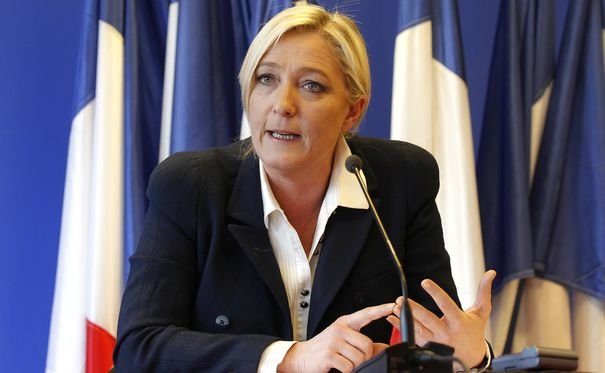
One of the more dramatic results was in France where Marine Le Pen, leader of the National Front party could find itself with 25 seats, up from just 3 seats in 2009.

Click on image for full picture
Marine Le Pen, leader of the National Front party, holds just two seats in France's parliament, but 23-25 in France's allotment of 74 seats in the EU. Photo from scenarieconomici.it

In the UK, the Euroskeptic UKIP party leading for the most seats of the 74 alloted to that country, with similar skepticism finding voice in other EU countries - Denmark and Hungary for two.

The EU parliament has approximately 750 seats, seemingly unwieldy, but once the votes settle in with firmer numbers, there will no doubt still be a majority in full accord with EU goals and vision. Germany in particular, with the largest number of seats (96) in the EU parliament, maintains its orientation towards European integration (though with tough financial standards).

Click on image for full picture
A Slovenian representative (left) speaks with German delegates at a recent EU gathering. The recent surge in EU skeptics will likely mean a "rightward" tack in the organization, where certain issues will be dealt with than others, but not a breakdown in the entity by any means. Photo from ec.europa.eu (Dr. Janez Potoċnik, Slovenia)

But there is unrest in the organization, somehow similar yet much more complex than the United States where 435 members of Congress representing 315 million are polarized (but at least speaking American english). Imagine the complexity of the EU with 500 million citizens, and dozens of languages. The EU in that sense is closer to India, with its dozens of languages, religions, and 790 seats (though outpacing either the US or EU, with 1.2 billion citizens).

In Europe especially, immigration concerns and strong nationalistic strains tend to bring up reminders of the dangers of far right ideologies - overt anti-semitism and fascism - so separating true concerns from these more extreme views will be the challenge.

On to the Ukraine

It appears that a billionaire who runs a chocolate industry in the Ukraine will be the next President of this fractured country. Petro Poroshenko, aka the "Chocolate King," won more than 50% of the vote, which avoided a runoff in June. A former economics and foreign minister, ironically, he served in the cabinet of his the previous ousted President Viktor Yanukovych. Mr Poroshenko has major challenges ahead, to say the least: armed pro-Russian separatists, and big natural gas bills to be paid might top the list.

New Ukraine President Poroshenko, with wife Marina behind to the right speaking to the press. Photo from www.veooz.com

On to Lithuania

In contrast to the surprise of the EU elections, and to the drama in Ukraine, there is a steadier election result in the small Baltic state of Lithuania.

Lithuania, with a population of just over 3 million, also has similar tensions between its native Lithuania population and a sizable presence of Russians - a legacy from the Soviet Empire days. Graphic from geography.howstuffworks.com

Dalia Grybauskaite won her second term as President of this country, and she ran her campaign on a tough stance towards Russian expansionism. As one article writes, "President Grybauskaite has welcomed the presence of NATO troops in Lithuania since the upheaval in Ukraine. The 58-year-old president has a karate black belt and promised during the campaign that she would not be intimidated by Russian aggression, saying "I'll take a gun myself to defend the country if that what's needed for national security."

Click on image for full picture
2nd term Lithuania President Dalia Grybauskaite has no illusions regarding Russia, based on her country's experience under Soviet occupation after WWII, and the most recent Russian generated uproar in the Crimea and Eastern Ukraine. Photo from www.15min.lt

Another article notes the Presidential election came as Russia's annexation of Ukraine's former Crimean peninsula and "sabre rattling in the neighbouring Russian exclave of Kaliningrad have sparked deep seated fears in Lithuania .... Grybauskaite first urged and then welcomed the arrival of American troops last month as NATO stepped up its presence in the Baltic states, which spent five decades under Soviet occupation until 1991."

Lithuania joined the EU and NATO in 2004 and thus has a much deeper security position than does Ukraine. She is referred to as the Iron Lady, similar to UK's Margaret Thatcher nickname in the 1980s. Though representing a small 3 million population entity, "iron" must necessarily be tempered.

Click on image for full picture
A small, but symbolic contingent of US troops arrived in Lithuania, shown here standing with a Lithuanian force. Photo from rt.com

Lots of change ...

Monday, May 12, 2014

Elections - from Donetsk to Ukraine to India

Three elections - one just past in two jurisdictions of Eastern Ukraine, a national election in Ukraine coming soon, and a countrywide election in India begins today. Between the three, lots of implications.

Let's start with the farce:

Click on image for full picture
Donetsk and Luhansk - the two Ukrainian oblasts (similar to provinces, states, prefectures) in the far east of the country - have now held referendums on separating from Ukraine. The two jurisdictions hold about 6.5 million people out of Ukraine's total of 46 million. Teatree assumes, however, that the Crimean population of 2 million should be subtracted from the 46 for all practical purposes as the first dismemberment of the country Ukraine, courtesy of Mother Russia's expansion by arms. Graphic from the BBC

The BBC puts it this way, ""Self-rule" referendums have been held in Ukraine's easternmost areas, with pro-Russian separatists claiming nearly 90% voted in favour in Donetsk region. BBC reporters at polling stations in Donetsk and Luhansk regions spoke of chaotic scenes, no voting booths in places and no electoral register. At least one person is reported to have been killed by armed men loyal to Ukraine's government. Ukraine called the vote a "criminal farce" organised by Russia. Western countries have also condemned the vote. Separatist leaders ignored a call by the Russian president to delay it."

So, if we read the western accounts at least, there was no "voter ID" describing who is eligible to vote - is that important? We currently hear of this same issue in the US, a charge that requiring voter ID is an attempt to suppress voters ...

It could be true that of those who actually placed a ballot in a box, that 75-90% indicated a preference for an independent region (from Ukraine), but was it representative of the whole Donestk and Luhansk population? Were others intimidated from showing up at the polls, were the poll booth locations well known, established? All those "details" seem up in the air. And of course, the idea of a modern nation comes with some control as to when elections can be called for - rather than just anyone's whim, or who is armed beyond the recognized authority. So, if nothing else, the procedures of these spontaneous elections in Eastern Ukraine can be learning case studies for what constitutes valid elections, and how representative democracy is ensured.

A strange picture - courtesy of the BBC - the uniformed man is Valery Bolotov, the Luhansk oblast's self-declared "people's governor", and the meek gentlemen in the background is there to ... show his subservience? Photobombing to declare his interest in the Beatles?

Next, the May 25 national Ukrainian elections

These nationwide elections are the ones sanctioned by the Ukrainian government (which of course Russia nor the Eastern breakaway oblasts nor Crimea recognize. They, Teatree assumes, still hold Yanukovych as the official Ukrainian president, complete with his mansion outfitted with gold-plated toilets ...).

The election is to provide all Ukrainian citizens the right to officially signal the legitimacy (or not) of the current leadership of acting President Oleksandr Turchynov who took over after Yanukovych fled the scene. Originally scheduled for 2015, the presidential election was moved forward to fill the vacuum from Yanukovych's departure. It will be monitored by over 1000 election officials from the European Union.

Click on image for full picture
Acting President Turchynov slated for becoming official in late May. Photo from www.veooz.com

The outcome of this election is virtually assured - acting President Turchynov will be installed as a new official Ukrainian leader - and equally likely, it will be a unpredictable, dangerous event. The aftermath of the election will also be fraught with further tension. Though the European Union will be able to deal with an internationally recognized government, Russia will likely not accept the outcome - or simply ignore whoever is legitimized. With the new government in place, the EU is poised to place more sanctions on Russia, while Russia in turn is likely to demand payment for natural gas from the new government - a debt that was growing under Yanukovych, but is now suddenly and spitefully due. What will happen during the election itself in the Donetsk and Luhansk is speculative. At least in Donestsk, the people's governor has said there will be no May 25 voting. Period.

The election in India

Halfway around the globe in the world's biggest democracy, voting has begun which will decide which party will hold the most seats in parliament and therefore provide leadership for this nation. Be it far from Teatree to assume he can begin to explain the myriad of parties and tensions and hopes of all the many platforms, alliances, and rivalries attendant to this vote. So just a few points to make.

With over 814 million voters eligible to cast ballots, there apparently have been several phases of voting, culminating this week. Graphic from en.wikipedia.org

From wikipedia, we read, "The 2014 general election is taking place in nine phases in India, the longest election in the country's history, from 7 April to 12 May 2014 to constitute the 16th Lok Sabha. Voting will take place in all 543 parliamentary constituencies of India to elect members of parliament in the Lok Sabha. The result of this election will be declared on 16 May, before the 15th Lok Sabha completes its constitutional mandate on 31 May 2014.

According to the Election Commission of India, the electoral population in 2014 is 814.5 million, the largest in the world.There is an increase in newly eligible voters of 100 million since the last general election in 2009. ...Incumbent Prime Minister Manmohan Singh has ruled himself out as a prime ministerial candidate."

Indian political parties are, to no surprise, numerous. There are 1500 + unrecognized parties, over 40 state parties, and 6 national parties. The two major national parties have been the well known Indian National Congress which has produced a number of leaders with the last name of Ghandi and/or Nehru, as well as the party of India's current Prime Minister, Manmohan Singh. The Bharatiya Janata Party (BJP) party has become the major rival, and what is interesting is its more public stance as a Hindu-based party.

The BJP head, a Mr Narendra Modi, if his party triumphs with the largest number of parliament seats, would then become Prime Minister. And early exit polls in today's first day of voting indicates this outcome is likely.

Click on image for an easier read of the text
Mr Narendra Modi, the likely next Prime Minister of India? Photo from high-definition-wallpapers2013.blogspot.com

A Wall Street Journal article describes the likely outcome and controversy around this candidate, "Mr. Modi appealed to voters by promising rapid development and an economic turnaround in a country fed-up with slowing growth, corruption scandals and indecisive leadership. He is also expected to take a tougher stand on security, particularly with neighbors Pakistan and China.

But Mr. Modi is seen by critics—and many among India's large Muslim community—as a hard-line Hindu leader, evoking distrust in a nation with a long history of communal violence. He is accused of not doing enough to stop religious riots in his state in 2002 in which some 1,000 people died, most of them Muslims—events that led to a rejection by the U.S. of Mr. Modi's visa in 2005. Mr. Modi denies those allegations, and a court in December said there wasn't sufficient evidence to prosecute him."

So tensions are intertwined in this election as with most others. However, one item caught Teatree's attention in some of the coverage of the election. A sizable number of Muslims are voting for Modi, because they are ready to accept his statements at face value that he is not favoring any ethnicity or freezing any out. He is for practical development. Muslims, especially vocal in the small but well known city of Varanasi, say they are tired of being promised broad tolerant support by the Indian National Congress, yet little results. They are tired of being considered a safe voting pool. They are ready to accept Modi's more immediate promise of practical and focused development projects. It seems like a significant step for Muslims to bravely reach out and support such a candidate. Their position emphasizes that no ethnic group grasping for active involvement within a democracy wants to be taken for granted, be viewed and marginalized as a safe bloc of votes, rather a bloc that is sought out, respected, and made part of responsible governance.

For a much more eloquent narrative on this Muslim perspective, read, "Varanasi: Why many Muslims find hope in Narendra Modi

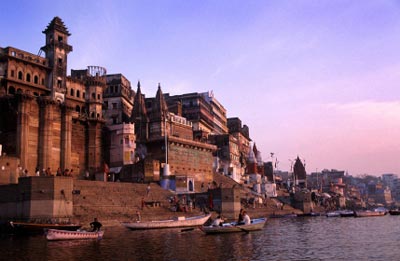
Varanasi is a city of India on the banks of the river Ganges - described as small (a mere 1 million), but religious and holy. Photo from www.elllo.org
So many aspects enter into elections, eligible voters, outcomes, promises, rejections, and governance. The whole gamut is contained in these three elections during May 2014.

Saturday, April 19, 2014

Jews (among other minorities) at risk in the Ukraine?

Among the several outrages of Russian President Putin's stance and actions on Russia's Western borders, is the opening it has allowed for extremists to re-emerge. As one young woman remarked after a stay in Eastern France five years ago, "In the U.S., Hitler may have been relegated to the rubbish bin, but in Europe, he continues to loom large ..."

As Putin out-bluffs and out-maneuvers Western European nations and the US (earlier in Georgia, in Syria, and now in the Ukraine) expanding his de-facto Mother Russia borders, anti-semitic flyers have emerged in the Eastern Ukrainian city of Donetsk.

Click on image for full picture
Donetsk, with a population of 1 million, is one of several eastern Ukrainian cities that have experienced pro-Russian militants emerge, storm and occupy government buildings. Graphic from the Washington Post

As reported in the Guardian newspaper, masked men were confronting people at Donetsk's only remaining synagogue last Wednesday, distributing the notices. "The flyer asks all Jewish citizens aged 16 and older to register with the "Donetsk Republic commissar for nationality affairs" and pay a $50 fee, "given that the leaders of the Jewish community of Ukraine support the Banderite junta in Kiev and are hostile to the Orthodox Donetsk Republic and its citizens. Those who refuse to register will be deprived of citizenship and forcibly expelled from the republic and their property will be confiscated."

Click on image for full picture
The chief rabbi of Donetsk, Pinchas Vyshetsky, holds one of the flyers. Photo from http://yalibnan.com

The masked men apparently left quickly when confronted, but news of the incident quickly spread worldwide with reactions from anger to grief. Within another few hours, the new pro-Russian militants holding court over the city denied their involvement, saying it was an effort to discredit their position. All of which may be true.

Ukraine has had a long checkered history of anti-semitism, and in broader terms, much of Eastern Europe has similarly. In World War II, Jews were attacked both spontaneously and with planned intention by significant elements within these nations, only to be surpassed by or incorporated willingly into the Nazi's program for a final solution. In Ukraine alone, nearly 900,000 Jews were killed during the Nazi occupation. (At the same time, to emphasize the complexity, Ukraine citizens are 4th in number in Israel's "Righteous among the Nations" recognition.)

Hitler, neo-Nazis, fascism and communism still deeply divide this Slavic nation.

While the West saw most of Ukraine's population supporting a pro-European stance, disgusted with previous president Yanukovych's self-enrichment and personal political agenda, there was nonetheless more than a fringe presence of a variety of ultra-nationalists involved the removal of the pro-Russian leader.

As a recent Washington Post article observed, "for Ukraine and Russia, no era or actor is more omnipresent in today’s crisis than World War II and Stepan Bandera. Born in an obscure village in 1909, Bandera in the early 20th century fought for an independent Ukraine, which at the time was carved up between Poland and the Soviet Union. Honoring what they see as his legacy as a thorn in the side of the Soviets, Ukrainian nationalists have strung up a massive poster of their hero in this city’s Independence Square, using him as a rallying cry against the new menace in Moscow.

But if Bandera is idolized by some in the capital and western Ukraine, he is reviled as a fascist in much of the heavily ethnic-Russian east and south as well as in Russia itself. There, memories are still fresh of Soviet-era campaigns that sought to discredit Bandera, and his quest for a Ukrainian homeland, by playing up his ties to Germany’s Third Reich."

Click on image for full picture
Stepan Bandera poster in central Kiev during the recent uprising against Yanukovych. In modern Ukraine, Bandera is an individual who represents the tensions of a divided country where to some he is loved, and loathed by others. As the WP article puts it, "How do you unite a nation that clings to different heroes?" Photo by Nikki Kahn/The Washington Post

What the flyers represent on one level, then, is an attempt to discredit one group or another with links or reminders of Nazi ideology. And as the Chief Rabbi of Donestsk puts it, ""I think it's someone trying to use the Jewish community in Donetsk as an instrument in this conflict. That's why we're upset..."

Indeed, the conflict in Ukraine has quickly turned into a geopolitical chess match - Russia dredging up its anger over the Balkan War, now 20 years old, (mainly pounding away at its mantra - don't interfere with sovereign internal affairs) and other past slights, implying there is still much to be redressed to "protect" Russian remnants throughout Eastern Europe. And lost in all this, Teatree wonders whether there is any interest or capability by either pro-Russian militants or Ukrainian authorities in Donetsk to pursue culprits who passed out anti-semitic flyers, putting the local Jewish population in the forefront as a pawn in the larger maneuverings.

Click on image for full picture
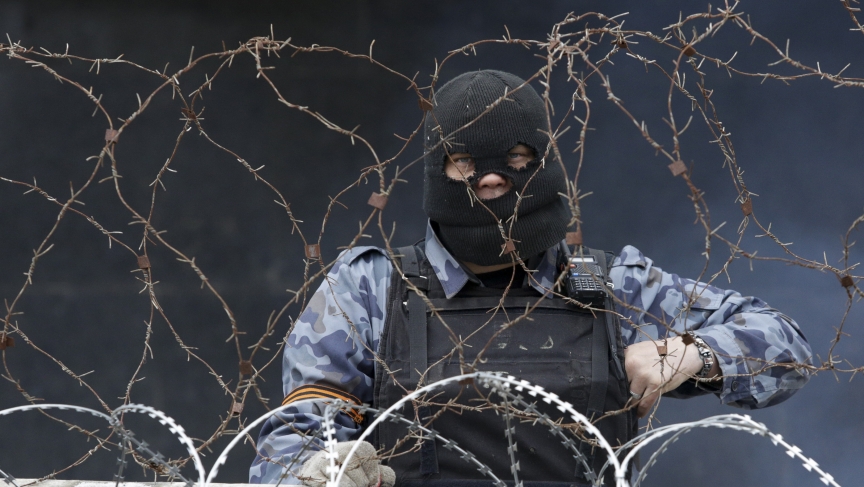
Another of the many charges thrown at Russia by Europe and the US, is the presence of organized Russian military elements or under its direction, in the guise of pro-Russian citizens of Ukraine. For Russia, always having stood by the concept of "non-interference" in other nations' affairs - this charge seems intertwined with hypocrisy. Photo from www.pri.org

The anti-semitic incident brings to the forefront the issue of fundamental governing responsibilities and the many levels that fall short of the mark

Most modern societies are characterized by a ceding over the responsibility of sanctioned violence, or the enforcement of law and order, to the duly authorized government (city, county, state, province, oblast, and federal levels). In exchange, the government is expected to actively pursue and end unsanctioned violence, as well as incidents of persecution directed at individuals or groups among the population.

(Interestingly, in the US, there is a pronounced, and constitutionally enshrined, right of citizens to be wary of giving government that very tool. Yes, the government should take the lead, vigilante justice is not the preferred approach, but there remains a right to bear arms.)

As one of the better articles Teatree has read on this Ukraine drama, Ukraine crisis: Donetsk anti-Semitic leaflets stir old fears it concludes, "As the stand-off between Russia and Ukraine deepens, so does the dangerous power vacuum that it has created. Like any conflict, it has already begun to unleash long-dormant religious and ethnic tensions. Minority groups here fear that they will be the biggest victims of this conflict between two Orthodox, Slavic nations."

So one could create a hierarchy of good governance in protecting its citizens as follows:

#1 Active, principled pursuance by the government of criminal elements, including proactive steps towards strengthening the rule of law, is the ideal.

#2 A major step down is a studied indifference to rights, especially of minorities, or any sphere of lawbreaking. Many nations have fallen short of this at various eras. One only needs to look at the US' Jim Crow laws allowed for so many decades and clear into the 1960s ...

#3 Active persecution or favoritism shown regarding one minority or class over another. One can take one's pick of all sorts of examples of this. Naziism and Communism probably rank the most odious, with the common thread being statism, or the importance of the state itself, over the individual. Islamic theocracies follow ...

#4 Sheer incompetence and corruption keep governments from fulfilling their responsibilities. It seems Nigeria with all its oil wealth, falls into this category, apparently unable to tackle its Boko Haram insurgency.

#5 Sheer inability of a central government to maintain law and order; anarchy, militias, and warlords reign instead. Afghanistan's recent history immediately after the Soviet Union withdrawal comes to mind that culminated in a new low - governance by the Taliban.

Whether one young Jewish boy of the 15,000 Jews left in Donetsk, or the Tatars of Crimea, it seems under the new Russian expansion, that many face an uncertain and constricted future. Photo from the BBC

Monday, March 17, 2014

Russia confronts the West over Ukraine

In a recent post (February 23, 2014) on the Ukrainian revolution, the reader can find a number of maps and graphics that merely underscore the recent moves by Russia to address Soviet Empire legacies.

Here, in mid March, Russia under the leadership of Putin, has used the ruse of protecting ethnic Russians in the Crimean Peninsula (part of Ukraine)to first activate troops already stationed in the oblast as part of its Black Sea Fleet, to hold key access points of the region (airports, border crossings, infrastructure).

Click on image for full picture

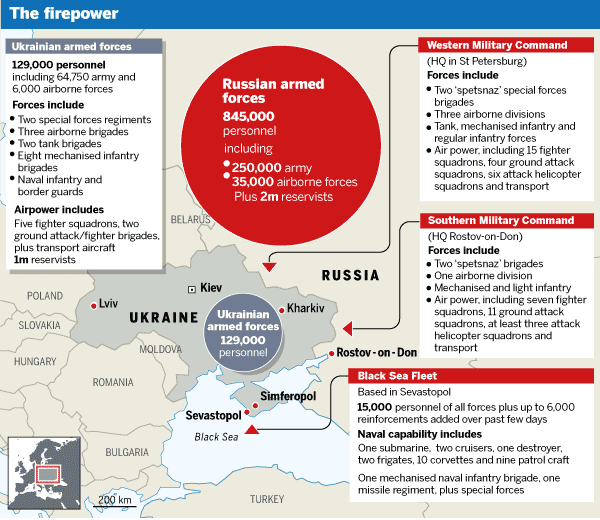
Possession is 9 tenths of the law goes a meaningless phase that somehow seems pertinent here. Despite howls of outrages from the US, Western Europe, and the Ukraine, Russia has a firm grip on the Crimean Peninsula. Graphic from the http://blogs.ft.com/the-world/files/2014/03/military.gif

In a second major move, Putin and pro Russian leadership in the Crimea hastily organized a referendum asking whether the residents would rather be part of Russia or remain with the Ukraine. The voting results on Sunday night, March 16, were 95% for joining Russia.

Ethnic Russians in the Ukraine ecstatic about rejoining their homeland.

Click on image for full picture
UK Foreign Secretary William Hague (left), US Secretary of State John Kerry, and UK Prime Minister Cameron (right) talk and talk about the Russian fait accompli Photo from uk.gov

Russian President Putin, and military leaders on the move. Where is the "mission accomplished" banner? Photo from http://www.veooz.com

Items to ponder:

Russia claims that it is concerned over the safety of Russians (ethnic, formal citizenship??), using that as the prime reason to have made its Crimean move. There are a lot of of Russian remnants around Europe. This Crimean incursion is the third such move in the past several years. Two breakaway provinces in Georgia claimed affinity with Russia, and Russian arms ensured they could make their choice.

The precedent being set here certainly opens the door for many ethnic groups to claim affinity with neighboring nations. It may embolden or further inflame longstanding ethnic enclaves in nations, however the pattern Russia has established is: 1)safety of ethnic Russians at stake; 2) military moves to ensure safety; 3) once in control, hold a referendum of some sort to allow protected Russians their voice. Other groups around the world may or may not find a champion to militarily protect them before a vote.

Even China seems a little ambivalent - after all both China and Russia have long been the champions of internal affairs being the responsibility of the sovereign nation. "Don't interfere in Syria, don't interfere in Libya, don't interfere in Darfur," "certainly not Tibet," and even now the sole supporters of North Korea - all these stances have suddenly been cast aside when it comes to Ukraine.

We'll see whether Europe and the US for that matter have the fortitude to make Russia feel the pain - with economic sanctions for example. Will such sanctions be painful enough to be noticed, or would it be more of a salve for the Western leadership to say, look what we've done.

To date, Russian President Putin has apparently looked over the current crop of Western leaders, including the US, and decided he can make these moves with little concern - a bit of spitting, perhaps some sanctions that are more than likely to be tolerated, but nothing he is not willing to pay.